Showing posts with label advice. Show all posts

Sunday, November 6, 2011

What to Pack for GHC North America

Whether it's your first Grace Hopper Celebration or your fifth, every conference is a new experience, so we've put together a short list of "must pack" items to make sure that you come prepared for this year's conference in Portland!

1. Umbrella and Rain Gear We're expecting rain in Portland in November, so be sure to come prepared with an umbrella, rain coat, boots, or anything else that you need to keep yourself dry on your way to and from the Oregon Convention Center.

2. Layers, layers, layers With outdoor temperatures in Portland currently predicated in the range of 41*F to 52*F (5*C to 11*C) for the conference days, and the convention center indoor temperature set to 72*F (22*C), you'll want to have plenty of layers to keep warm and adjust accordingly. During our planning trip in August, we found the convention center chillier than expected, so you'll want to have layers to wear indoors as well.

3. Business Cards and Resume
In order to follow up on those connections you'll be making at the Grace Hopper Celebration, be sure to bring along your business cards. Take stock now to make sure you have plenty and then don't forget to pack them in your bag. And be sure to bring copies of your resume to have on hand when you visit exhibit booths and speak with sponsors.

4. Comfortable Shoes
With packed conference days, you'll want to have comfortable shoes to keep you on your feet and walking around the convention center. You'll also want to be sure to wear comfortable shoes to Sponsor Night on Friday so that you can dance to our DJ!

5. Camera
Capture all of the memories--don't forget to bring your camera to the conference.

6. Laptop... Or Just Visit the Cyber Center
Many attendees choose to bring their laptops to the Grace Hopper Celebration, and there will be free wireless internet sponsored by Juniper Networks. If you decide not to, you can access the internet and use a computer at the Cyber Center in Exhibit Hall C, sponsored by the Anita Borg Institute.

Are there any recommendations you would add?

Your GH11 Presentation is Ready -- Now It’s Time to Practice

I’m guessing that most of us have pretty much completed preparations for our Grace Hopper presentations, right? For myself, I have thought a lot about my audience and I’ve made decisions about how much I will be able to say -- and say well -- in the hour that I have been allotted. What now? My presentation is on Friday. I’m done, right? Well --- now it’s time to practice.

There are two fundamental ways to practice: 1) silently and 2) aloud. The first way involves a review of your presentation in your own head. We all do this a lot before we present because it helps us feel comfortable with our story and because we think that we will be less likely to forget what we want to say if we go over and over things in our minds. It is easy to practice this way because we can give ourselves a silent presentation anywhere and anytime.

The second way of practicing asks more of us and leads to different results. I will be very direct here -- I believe that you must practice your talk aloud in order to deliver an authentic and well-paced presentation. And you must practice in a way that simulates the context in which you will speak. (It would probably be ideal if we could all practice giving our talks to a real audience in a real meeting room, but most of us are not that lucky. No worries -- make a commitment to practicing aloud and know that you are preparing yourself for a great result.)

Find a space where you can set up your laptop and project your visuals. I have practiced this way in my living room where the visuals are projected on the wall; and I have practiced this way in a hotel room. Even if you are not able to project the visuals during your rehearsal, you can set up your laptop and use it in the same way that you will use it during your talk. Being comfortable with the physical things you will do during your presentation is very important -- almost as important as being familiar with your story.

Practice introducing yourself and getting into the talk; practice moving around; practice your gestures; practice with the laser pointer if you will use one; figure out when to advance to a new visual and practice the verbal transitions; see how it feels to look around to all parts of the room; play with volume and speed. Also be sure that you time yourself during your rehearsals so that you know where you are and where you want to be during each section of your presentation.

In addition to practicing aloud in a “real” context, you can practice aloud to an invisible listener while riding your bicycle, while cooking, while in the shower. You will be able to hear the speed, the pauses, and the flow in a way that you cannot hear these details when the story is a silent one. Any time you speak aloud, even to yourself, you are incorporating the physical and sensory aspects of presenting, and you are preparing yourself for the real experience of transforming thoughts and ideas into a spoken story.


Have fun with your preparations and rehearsals. I will see you next week in Portland!

Tuesday, November 1, 2011

PhDoula: Five do-overs since my first Grace Hopper Celebration for Women in Computing

This post originally appeared on the blog PhDoula and is re-posted here with permission from the author, Alexandra Holloway.

Grace Hopper Celebration for Women in Computing is an annual event bringing together thousands of women from different technical computing specialties and at different stages of their career. Attendees include undergraduates considering computer science as a major, graduate students choosing their research direction, recent graduates looking for a job, women in industry, professors, researchers, and recruiters. It is a diverse, funky, exciting, inspiring, and nurturing environment of two thousand women, all of whom are smart, brilliant, beautiful, and different in their own right.


This year will be my fourth time attending, which makes me a Grace Hopper veteran. I first heard about Grace Hopper Celebration from my room mate from CRA-W Grad Cohort -- a similar but much smaller mentoring program for graduate student women -- when I asked my room mate how on earth she knew all these people. She was saying "Hi," calling people by name, and giving hugs to everybody!

"How do you know everyone already?" I asked her.

"Some women I know from last year's Grad Cohort," she replied. "But some women I see basically twice a year: at the Grad Cohort and then again at Grace Hopper Celebration."

"What's that?" I asked. Casually hiding her surprise that I had neer heard of Grace Hopper Celebration, she explained it to me, and that night in our hotel room I looked it up and bookmarked it.

When Grace Hopper Celebration came around that year, my advisor asked if there are any women that would like to go, because our university was a sponsor and received a few spaces for student attendees. Of course, I replied immediately in the affirmative, and off I went!

Now that I have been three times to Grace Hopper Celebration (this year will mark my third time as a contributor) and twice to the CRA-W Grad Cohort, I can look back on my first Grace Hopper Celebration visit a bit critically.

My first year, Grace Hopper Celebration was held in Keystone, Colorado, a small resort town situated in the mountains among an aspen forest. The trees were just starting to turn in ones and twos: blots of color among a sea of green leaves. I was driven from the airport in a shuttle and looked out onto the picturesque landscape with wide eyes. I was young, impressionable, and pregnant.

Yup, I was about 24 weeks along in my pregnancy. I knew I was carrying a boy, and I had just returned from a trip abroad -- a delayed honeymoon -- before having time to buy clothes that fit me. My belly had just started getting too big for my pants. It happened so suddenly that I was ill-prepared, wardrobe-wise, for the change in my figure. I was a hot mess, unbuttoning my jeans and praying that my fitted t-shirts did not bust into holes stretched over my growing belly. When my mother saw me at the airport on my return from Grace Hopper, she was shocked at my fashion sense, but at the time, I figured that is just an extension of the typical graduate student lifestyle. Right? Please tell me I am right.

Anyway, back to the point -- I could have done a better job. As an early(ish) graduate student, my main role was to be receptive to mentoring and to meet people that would help me in my career path. I see that now, in hindsight, but at the time I did not recognize these goals. Here were my top five mistakes from the first year. Every year I go back, I get a do-over and do my best to avoid these.


Do-Over #5. Eat lunch and dinner.

At CRA-W Grad Cohort, one of the rules was that no two women from the same university could sit together at lunch. You had to learn to network, and to meet other women. But here, at Grace Hopper Celebration, there was no such rule, and even if there was, there is no way to enforce it with 2000 attendees. So attendees would sit with the people they knew more often than not, and I, seeing this social norm, followed suit. Not a good idea. Now I know that it is best to sit at a table where you know no one. Even better: sit at a table where you know no one, and everyone is different from you. Is everyone older? They have more experience. Is everyone younger? Maybe they have questions. But if everyone is exactly like you, there is no way you can broaden your experience. Challenge yourself.


Do-Over #4. Use the room mate.

I was at Grace Hopper Celebration on an underwriter scholarship, and, like all scholarship recipients, I had a room mate. Actually, in this year, we were in a three-room cabin in the mountains of Keystone, Colorado, and I had two house mates. My house mates were amazing. They asked me about pregnancy and married life, about the proverbial work-life balance (as if there is one), about what I will do once I have the baby (hint: stay in school). On our last night in Colorado, we all went shopping to the outlets nearby and my lovely room mates bought me a shirt that actually covered my entire front. Maybe it is silly, but I was moved.

But most of the day, my house mates (who knew each other) would be off on their own, and, in pregnancy-related discomfort (more on this later), I left them to themselves. I did not go to see their posters at the poster session; I did not ask for introductions to other women; I did not sit with them and their colleagues at lunch. But this was wrong. Use your room mate (or room mates, if you are lucky enough to have two) -- use them as mentors if they are more experienced at Grace Hopper Celebration than you are; use them as friends if they are new like you; use them as a sounding-board for your elevator pitch for your research.

My room mates approached me on the second day and said, with a sly grin, "We are thinking of taking a drive up to the summit, instead of one of the sessions. Are you in?" I considered for a moment, wondering if it is OK to skip sessions, and if we could leave the conference grounds without arousing suspicion among the organizers. Hesitating a little, I said that it sounds like great fun, and that I would certainly come.

As we arrived to the summit, the weather shifted dramatically, from cool and clear autumn to cold and foggy winter. Not another person and not another vehicle was within sight: it was just us. It began to snow in large, fluffy flakes. The electricity in the air made our hair stand straight up, and lightning bolts noiselessly crashed all around us. We giggled and photographed and huddled in our insufficient jackets -- and bonded. We formed relationships which would survive the test of time and geography -- relationships we could later fall back on in our professional and personal lives, because we had this shared experience.


Do-Over #3. Couch potato networking.

During the course of Grace Hopper Celebration, my baby, whom I called Galahad ever since knowing I was pregnant, grew as well. I would like to think it is because of my rock hard abs that, one day into the Celebration, I started getting rib pain. My ribs were expanding to fit my high-carried fetus and I was in pain from the pressure in my ribcage from about noon until I went to bed every night. I did not tell anybody (except my amazing room mates) because I had never enjoyed complaining, especially to strangers. Even strangers that are there for the express purpose of caring for and mentoring me.

Half the day, my ribs would hurt so much that I could not sit up. Sometimes I would go back to my room and lie down; other times, I would sprawl out sideways on one of the low arm chairs in the conference area and try not to moan. Both of these were missed networking opportunities. Now I see that it is OK to sprawl in pain rather than attend a session, as long as I am doing something to further my career.

See, I had no idea where my academic career was going. Here I was, not even half-way through my first pregnancy, not even two years through grad school, and with no idea where my research interests were. Every class I took was fascinating for the first three weeks; every project I undertook was interesting only for the first half. I knew I was a fantastic teacher but had never undertaken any serious research project. I knew I wanted to be a professor eventually -- but a professor of what? How do you find the one thing that really turns you on?

These are all questions that, though they cannot be answered by someone else, they can point you and your mind and heart into a direction. Other women's experiences can influence how you experience yourself. Maybe I am getting a little hippy-dippy. But my point is that I was not using this time to the best of my abilities. I could have been meeting women in a higher position than myself and asking for advice; I could have been meeting my future mentor; I could have been learning with others, rather than suffering alone!


Do-Over #2. Tell your secret.

Maybe it was the pregnancy hormones talking, but I posted an anonymous advertisement on the bulletin board:
Looking to connect with other pregnant graduate students and those with kids.
I added my e-mail address and hoped for the best. The truth is that I did not know what I was looking for. Support? Advice? Encouragement? I did not have any concrete questions but I wanted to know that I was not alone, that my experience was not unique. In some ways, I suppose, I wanted validation. I wanted someone to say, "I know things will get rough, but you can do it, because I did it." Though I did receive a few notes, mainly by other participants pinning replies to the same bulletin board, I never replied to them, in part because I did not know what I wanted to say, and in part because I did not want to give away my secret.

I had only told my room mates, and mentioned it once at lunch. One of the women, another student, lit up: "Do you have maternity leave at your university?" I answered honestly that I did not know. She persisted: "You know, it should be covered by the union. They bargained for it just last year. It is brand new this year. You should look it up." After lunch, she and I both went to the computers and found the relevant sections. She was glad to help me, and I was glad for the help, because until then, I had never considered my rights and my future as an employee of the university.

It was not until the last hour of the last day, when several of us were loading the bus, that I told one more person about my pregnancy. She was a young woman with a large baby, and introduced herself as a professor. We chatted briefly about pregnancy, and exchanged information. It seemed so natural and inconsequential at the time -- especially as I had such a reverence for professors because of what I now see was mild impostor syndrome -- but I was calmed by her easy nature and friendly manner. This small event which I had put out of my mind as an impossibility because of the difference in rank, this easy exchange of words and information, this event was probably the best thing that happened to me at Grace Hopper Celebration that year. Today, the professor who befriended me continues to mentor and support me through my final years of graduate school. I told my secret to the best person I could possibly meet.


Do-Over #1. Meet the speakers.

I had attended a great many talks, but one in particular still speaks to me today. It was a talk I had heard before, at CRA-W, given by a graduate student that had changed direction several times in the course of her studies. She was explaining the same feelings I was having: She would take an introductory class and enjoy it immensely, but not enjoy the follow-up class. It took her a long time to find a dissertation topic. She explained several ways that dissertation topics come into existence: the extended course project, the advisor's list of unfinished work, the stroke of genius, and others. She struck me as someone I would love to be friends with -- but she was so smart! so accomplished! What would I have to offer by speaking with her?

Wrong, wrong, wrong!

Now that I am also a speaker at Grace Hopper Celebration, I know that speakers are people too. I love it when people attend my talks, and I love it even more when they stay afterwards to tell me that the talk was useful to them, my nervousness did not show, or even that my animation skills in the slides were top-notch. Which, I assure you, they are not. I love it when people tweet about my talk. I love it when people come to ask me for advice, or ask for my contact information in the case they have questions about something I said. I love just knowing that someone, somewhere, was affected by my talk.

I did approach this particular speaker, and I told her that I had heard her talk before and I really admired her. She was surprised: "What, me?" Laughing heartily, she chatted with me about grad school, clearly expressing that she considered us equals. She and I are still friends today.

Since then, I make it a point to meet every speaker that inspires me. Even if she is the president of some fancy corporation, or the first author of an influential paper, or simply the woman that said something that really resonated with me. I introduce myself and say, "What you said just now, I really took to heart. Thank you for a great talk." If we happen to meet again, I can say, "We met at Grace Hopper last year. I loved your talk." This usually leads to an invitation to join her lunch table, which -- by the way -- I always gladly accept.

Friday, October 28, 2011

Keeping up With Facebook for GHC 2011

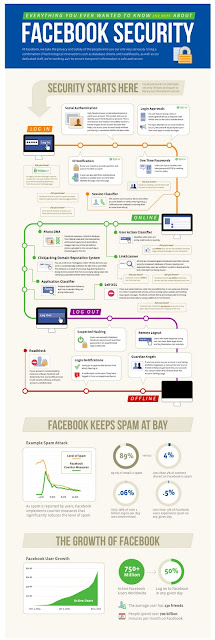
With all of the new features and security options facebook now offers it is difficult to know what your options for staying safe, yet utilizing the social network to its fullest extent. The easiest way to see all of the security features available to you is to check out the info graphic released by facebook below, see the facebook security page for a better view of this graphic.


Which of these security features are important and how can you still be visible professionally while at GHC11? Just remember a few simple guidelines before sharing on our facebook page :
  • Never give your password out to anyone
  • Never post personal or financial information on a wall or discussion, if you need to share this information do it through a direct message
  • Be wary of those with incomplete profiles, on a side note, if you are signing up for a facebook account for GHC11 socializing make sure you complete enough information so that it will be useful to socialize with. More on this in next weeks post.
  • Never make your screen name the same as your email addresses
Do you have some more tips about being safe while social networking on facebook? Post them here in the comments and share.

Until next time!

Charna

Tuesday, October 18, 2011

Organizing Your Talk for Grace Hopper 2011

Sometimes the task of organizing a talk seems more challenging than the material that you will talk about. Here are some things that might be helpful as you prepare your Grace Hopper 2011 presentations -

1. Story

Compose a logical story for your audience. Select the precise body of material you want your audience to learn and “know” as a result of attending your talk or panel -- include only the content that is directly applicable to this particular talk. Divide your story into the sections that you will cover, like “introduction,” “concept 1,” “concept 2,” “questions and answers,” and so on.

2. Backward buildup

Backward buildup is a way of thinking about your talk from the perspective of what you would like the audience to understand by the time you finish speaking. Distributing your content in the backwards direction ensures that your story ends where and when you intend, that each section is balanced and builds to the conclusion, and that the story in its entirety “fits” within the time you have been allotted.

Working backwards from the end of your talk, assign a chunk of time to each section of the story. Work all the way back to the first minute of the talk. Example - “My total time is 1 hour. I want the audience to understand 5 aspects of rhetorical positioning -- audience, purpose, genre, tone, and style; I want to discuss a sample text; I will end with questions and answers.” From the end of the talk to the beginning, the sections in the example talk are -

Section

8 Questions and Answers 10 minutes

7 Group analysis of a text 18 minutes

6 Style 5 minutes

5 Tone 5 minutes

4 Genre 10 minutes

3 Purpose 5 minutes

2 Audience 5 minutes

1 Introduction 2 minutes

60 minutes total

As you work through the backward buildup process, you may find that there is not enough time for all of the material you wanted to cover. If this happens, go back and delete the non-essential stuff, and repeat the backward buildup until you have a solid time plan that embraces your material. The sequence of topics in each section and the articulation across sections should have a logical flow.

3. Timing

All of the sections, including the question and answer period, must add up to no more than the total number of minutes allotted for your talk. When organizing the timing, you must account for possible technical problems, ideas that come to you in real time, and appropriate anecdotes, so leave some breathing room in your plan. Your talk should be thorough, interesting, and maybe even inspiring!

4. Selection of visuals

Go back to your story and the timed sections. Ask: “Are there any visuals that will help elucidate this section?” If no, move on and tell that part of the story without visuals -- audiences love this approach. If yes, then select only the visuals that advance your story. Maintain your love and attachment to other slides you may have prepared, but use only the slides that promote understanding and inspiration of your audience’s experience.

5. Visuals

The guiding principles when incorporating a slide into your talk is that the slide must advance your discussion, it must add an illustration and representation of an important concept, and it must be crystal clear. Each visual should be easy to navigate and understand from the point of view of the audience member. Don't crowd your slides -- “Less is more.” The language on each slide should be grammatically perfect; choose a font and use it consistently; build the slide from left to right and top to bottom.

6. Delivery

Have fun and don’t rush. Do not repeat -- keep things moving forward. And think about this perspective: You are the reason the participants are there; your connection with the material and with the audience is the important ingredient. It does not matter one bit if you delete a few details from your talk. It is more important to respond to questions and points of interest that the participants raise -- they have traveled long distances to learn from you and they deserve your direct attention.

7. Enjoyment

Your presentation experience at Grace Hopper 2011 should be as enjoyable for you as it is for your audience members!

Sunday, October 9, 2011

Great Presentations

Hello fellow presenters!

Those of us who will be giving talks at Grace Hopper 2011 are starting to think about what we are going to say and how we should prepare. We are checking our submission abstracts to remind ourselves of what we said we would talk about, and we are hoping to deliver on our promises to be worthy of the privilege of addressing a GH11 crowd. Some of us are thinking that we are a bit nervous about the whole idea of standing in front of an audience of brilliant friends and colleagues and sharing our ideas. What a huge responsibility, we think to ourselves. And at the same time, we think -- What a huge opportunity; and how much fun can this whole thing be for me?

For sure, there are a lot of details to consider when putting together a conference talk, whether we are a member of a panel of speakers or presenting by ourselves. And while a laundry list of reminder points is definitely not the way I think about presentation skills (I think about presenting a story as being much like a beautiful tapestry where many individual threads are woven together to produce a unique and creative work of art), perhaps it is helpful to mention some of these threads. So here are three things to think about as you begin your GH11 presentation preparations:

• Perhaps the most critical consideration will be the idea of what you will actually be able to talk about within the specific amount of time you have been given for your presentation. Choices must be made about what you must say to advance your story; which details are absolutely essential; which details are nice but not necessary to say because there is not enough time. Once you have made your choices, your story must be crafted so that it can unfold within your given time frame in a manner that is not rushed. So don’t try to tell a 90-minute story in 60 minutes by speaking faster and whizzing through your visuals. Work it out beforehand and stick to your game plan.

• Think deeply about your audience. Ask -- Who are they and how much do they probably know about my topic? Should I organize my story for a very narrow and specialist group or for a broadly defined group? The answers to these questions will guide you to prepare a story that has enough background and context so that your meaning will be clear. You may have to take time to explain some technical concepts that seem obvious to you but which may be new to many of your listeners. Remember that the people in your audience have traveled from all over the world and have made a choice to attend your talk. Return the respect by communicating a clear, logical, and interesting story that your audience members will understand, enjoy, and remember.

• We must partner our story with excellent delivery. Giving a talk is not simply a chance to unload a bunch of information. Giving an excellent talk is about connecting with your audience and sharing new knowledge that is meaningful to you and hopefully interesting and even inspiring to them. We can be excellent speakers by being as rehearsed and prepared as we can be, and by being our best, most excellent, enthusiastic, and authentic selves. Specifically, we must take care of things like volume; the clarity of everything we say, even the ends of utterances; eye contact; movement and gestures; how we face our audience, our laptop, our visuals, how we use notes to maintain at all times the connection with the audience; um-um-ums and uh-uh-uhs; how quickly or slowly we speak; and whether or not we smile even if we are nervous.

All of the ideas mentioned here are equally important and challenging for both native speakers of English and non-native speakers of English. Being a native speaker does not confer upon a presenter the privileged and automatic abilities of excellent story and excellent delivery. While our non-native speaker friends have the obvious huge hurdles of tackling the creation and delivery of a story in their second language, the underlying principles are the same as for native speaker friends. All of us have the same commitment to excellence and all of us strive to make memorable contributions to Grace Hopper 2011.

Thursday, September 16, 2010

New to Grace Hopper? So am I

The Grace Hopper Conference is among us and I am very excited.  I have been perusing the website to find interesting talks and sessions to attend as well as picking my blogging assignments for the Community Bloggers.  Then it dawned on me, this will be my first GHC experience.  Do I know how to make the best of my opportunity to attend the conference?

In undergrad, I attended a conference called ABRCMS (the Annual Biomedical Research Conference for Minority Students).  In fact, after attending 3 times as an undergrad and 2 times as a graduate student recruiting for my University, I consider myself a pretty seasoned ABRCMS veteran.  Here are 3 things I've learned from my ABRCMS experiences that I hope to use at GHC:

  1. Plan ahead:  There are a number of times when I have gotten to a conference or networking function and realized that I forgot my business cards.  Not a good look for anyone.  Make sure that you plan out what you will take with you to the conference.  If you are presenting, guard your poster/powerpoint with your life.  Just recently I managed to accidentally leave my poster at the security gate of the Pittsburgh International Airport. Fellow blogger Gail has a great entry on tips on planning for the conference.  You can find her advice at Getting Ready For a Conference
  2. Attend the Conference:  Conferences are great places to learn about new fields, meet new people, and connect with potential employers, collaborators, and/or friends.  The key to taking advantage of potential opportunities is to ATTEND THE CONFERENCE.  Simple concept, I know, but sometimes I feel the need to state the obvious.  
  3. Elevator Pitch: You never know when you will find yourself in an elevator with or standing next to a potential employer. Have a short introduction of yourself prepared. Keep it short, sweet, and interesting.  If your 90 seconds go over well, maybe you would piqued enough interest to continue the conversation. ~ Make it better ~ Got an iPad (or similar mobile device)? Upload a copy of your most recent poster to display your research if the opportunity presents itself. 
Now to all you seasoned GHC vets :-)  Please comment on this post with advice for making the most of the Grace Hopper conference.  I'm sure all the newbies like myself as well as others could appreciate the advice. 

See you in Atlanta! 

Photo credits to www.diypuppytraining.com 

Monday, September 13, 2010

How to Make the Most of Twitter for Grace Hopper

Short on time? Jump to "Networking Face-to-Face to Twitter (and Back!)"

Twitter has hit mainstream. News anchors suggest following their account for the latest updates, companies updating their online presence create accounts, celebrities use it to create their own press. And it is a norm at conferences.

Grace Hopper is no exception to this rule. Read on to learn how to make the most of it! (PS – Folks to which Twitter is old hat, jump to the NEW! highlights.)

Setting Up Your Account

It’s okay to use Twitter to only follow others. BUT – if you’d like to use Twitter to connect with other people, there are some steps you will want to take.

  • Personalize your account.
    • Having a name, profile picture, and bio is your first defense against being assumed a spammer. If you prefer to be more anonymous, you can omit your last name or use a nickname and upload an image that is not a photo. (Keep in mind having a photo allows other conference participants to recognize you.) The main goal is to make you look like a real person. Since, you know, you are. :)
      image
  • Understand the impact of the “Protect my updates” setting
    • With this setting on, others must request permission to see your updates. If you would like your updates to show up in the public stream, this setting must be turned off. To do this, log into Twitter, click Settings, scroll down and make sure “Protect my tweets” is NOT selected.
      image
  • Get out there and tweet!
    • Most important way to distinguish yourself from spammers? Start updating your Twitter account! People don’t follow people who have never tweeted before. They want to know what you have in common and if you tweet about things they want to hear more about.

Twitter Basics for GHC

Use the #ghc10 hashtag for ALL (before, during, and after) GHC10-related tweets. Doing this ensures your related tweets show up in the conference Twitter stream (provided your tweets are not protected). You can view the real-time stream by searching for #ghc10 on Twitter. To add a hashtag, simply include #ghc10 somewhere in your tweet.

image

The official conference Twitter account is @ghc. Following @ghc connects you to the latest conference news. It is also the account to which you can direct GHC questions. (Make sure to include the conference hashtag in your tweet to @ghc. If someone else knows the answer, they may be able to respond before the official account can get a chance!) If the @ghc account is following you back, you can also address private messages by starting them with d ghc.

image

Before, During, After, All Year Round!

Session/Workshop Hashtags NEW!
I've already mentioned using the #ghc10 hashtag, but new this year are session/workshop hashtags. When tweeting during and about session/workshops, include BOTH the #ghc10 hashtag and the corresponding session/workshop hashtag. This provides context for those following your tweets and people looking at the overall #ghc10 conference stream.

Update Your Poken with you Twitter Details NEW!
I just found out about this so excuse my uber excitement, but Pokens are available to all GHC attendees this year! They are FREE for students and $15 for non-students. (Seems reasonable to me!) You simply touch your Poken device to the Poken of the person you’re connecting with to exchange contact info. So make sure your Poken includes your Twitter details!

Twitter Lists NEW!
If there is anyone on these lists that is of particular interest to you, make sure to follow that person so they show up on your Twitter homepage.

  • @ghc/ghc10-attendees
    • This is where you can find all the #ghc10 attendees that are on Twitter. If you're attending GHC and would like to be added to the list, tweet or send a direct message with your request to the @ghc account.
  • @ghc/ghc10-speakers
    • A great list where you can find all the presenters from GHC10 that are on Twitter.
  • @ghc/communities-committee
    • See all the tweets from the members of the GHC Communities Committee.

Networking Face-to-Face to Twitter (and Back!)
Include your Twitter name on your conference badge, so the people you meet know they can connect with you online.

If you pardon me jumping on a soap box a bit, Twitter is my ABSOLUTE FAVORITE way to network. The nature of Twitter allows users to loosely stay connected. There is no need for the formal replies email, LinkedIn messages, and even Facebook messages require. Twitterers can choose which tweets to comment on. This leads to awesome scenarios such as receiving a solution from a contact I would not have even thought to ask as a result of tweeting a challenge I was facing. The other general benefit of being connected to your network by Twitter is best described by the video Twitter in Plain English.

Do take advantage of (and feel completely free to!) follow people in the #ghc10 Twitter stream that are tweeting about things that interest you. The main chunk of my network from past GHC conferences was from connecting with the women on Twitter prior to the conference, briefly meeting them in person (if at all), and then getting to know them over the course of the year via Twitter! Now I look forward to meeting up with my tweeple in real life! :)

Glossary

RT – Abbreviation of the word retweet. Retweeting is the action of quoting another user’s tweet. You can either type in RT @username and copy/paste the message or use Twitter’s Retweet button. You would use the copy/paste method if you would like to add a comment.

image
image

Hashtag – A hashtag is a word, phrase (no spaces), or abbreviation that is preceded by the pound (#) sign. It acts as a tag in your tweet.

DM – Abbreviation for direct message. Direct messages are private messages. To send one, the recipient must be following your Twitter account. Precede your message with d username.

image

Tweeple – What I like to call the folks I interact with on Twitter. :)

Any suggestions or tweaks to my suggestions? Add your thoughts in the comments!

Monday, August 16, 2010

How to Make the Most of Flickr for Grace Hopper

With the advent of digital cameras, we can all consider ourselves photographers. But what happens to the hundreds of photos you'll inevitably take at this year's Grace Hopper? Instead of letting them sit unopened on your hard drive, why not share them with fellow attendees and those who couldn't make it? The best place to do this is on Flickr!

Each year, a new Grace Hopper group is set up on Flickr where attendees upload their favourite images. For instance, check out the groups from 2007, 2008, and 2009. There's even a group up there for 2010 already. I still enjoy opening up the group for a year I attended and letting the happy memories return. I think this pool of photos is also an excellent way to get first timers excited about the next conference.

Here are a few how-to's to help you get started with Flickr.

How to get an account on Flickr if you don't already have one:

  1. Go to http://www.flickr.com/
  2. Click on the "Create Your Own Account" button
  3. If you happen to already have a Yahoo! account, you can just enter that in the appropriate text boxes (Yahoo! ID and password); otherwise, click on "Sign up for Yahoo!"
  4. Fill in the info and click "Create My Account" and follow any remaining instructions.

When you have a Flickr account, you can add photos to your own profile:

  1. After you log in, you will see a set of menu items along the top (Home, You, Organize & Create, etc).
  2. Click the little arrow beside "You" and click on "Upload Photos and Videos" near the bottom.
  3. Follow the instructions on the screen.
  4. Add titles, tags (e.g. ghc10 for Grace Hopper 2010), and (if you like) descriptions for the photos. These make it easier to organize and search your photos.
  5. Once your photos are uploaded you will see them when you click on "You" - clicking here brings you to your photostream, which is just a big long list of all your photos.
  6. You will probably want to organize your photos into sets (these are kind of like albums). Play around with the "Organize & Create" menu and be sure to consult the Flickr FAQ as needed.

You can join and add photos to a group:

  1. First navigate to and join a Flickr group (for example, the GHC2010 group).
  2. Once you're in a group you can start participating in discussions.
  3. Above the photos showing on the group's home page is a title called "Group Pool" - this refers to the "pool" of photos members add to the group. You will add photos that are already on your own profile as if the group pool were just another set your photos can belong to.
  4. Beside Group Pool click "Add Something?"
  5. You can choose up to 6 photos from our photo stream to be added to the group pool. You can do this as often as you like.
Link to or embed photos in other social media:

Once you have your photos uploaded to your profile, you may want to share them on other social media sites or include them in blog posts.
  1. Navigate to the photo you want to share. You can do this by clicking on "You" at the top, then clicking on the photo of choice.
  2. If you want to share just the link (say, on Twitter), click on "Share", "Grab the link" and then copy the text.
  3. If you want to embed a photo like I did below, click "Grab the HTML", change the size if needed, and copy that text. You can paste it into any editor that lets you write code. For example, on Blogger, you can switch to "Edit HTML" and paste the code where you want the photo to appear. Your photo will even be linked back to the original Flickr page so people can see it big!
Grace Hopper Celebration-9


Happy photographing! You'll find more ways to share the Grace Hopper Celebration experience at GHC Community Home.

Thursday, February 25, 2010

The Long and Short of Answering the Grace Hopper Call for Participation

You have a great idea for a Grace Hopper conference session. A really really great idea! In fact, as you prepare to submit your proposal, you realize that your idea may be TOO great. How in the world will you and your panelists cover everything that needs to be said in the space of a one hour session? It's just not going to fit! What do you do now? First, know that you're not alone. Others are facing the same problem as they work on their proposals. Others faced the same problem last year, and the year before. So I asked Deanna Kosaraju, the Anita Borg Institute's VP of Programs, what advice she has for those whose GHC ideas won't fit neatly into a one hour session.

Feeling the squeezeDeanna's top recommendation is that you really try to make the session fit into a single hour. Why? Because, based on prior GHC experience, Deanna expects there will be approximately ten times more conference submissions than there is physical space and time available at GHC 2010. In addition, the committees reviewing the program submissions will try to accept sessions from as many different presenters as possible. I'll offer some suggestions below for how to pare your session down. But here are your alternatives if feel you just can't make that work.

Can your idea be broken into two or more one-hour sessions? Divide them up with your collaborators and submit them (separately) as a mini-track. In the submission for each, describe how it is related to the other(s) and request that they be scheduled back-to-back (if that's necessary). But be forewarned: the committee may accept your multiple session proposals but only give you a single one-hour session to present them. This happened to me a few years ago when our two-panels-plus-one-BOF (Birds of a Feather) mini-track was accepted, but we were instructed to combine the two panels into one. We did, and used the BOF for the overflow conversation from the panel.

The other option is to include in your submission an explanation of how long the session should be. You will need to make a compelling case for why the session cannot be condensed into a single hour. You'll also need to show how the agenda will be broken up into chunks no longer than one hour, so that attendees will get regular breaks. Even if you do, the committee may accept your session proposal but only give you a single hour to present it. Deanna assured me this also has happened before.

Remember: The program committees will try to accept sessions from as many different presenters as possible. And they will receive many more great proposals than they can possibly fit into the available space and time. So let's go back to Deanna's original recommendation.

How do you condense a great session idea so it will fit into a single hour? Here are a few of my own suggestions, then I would love to hear yours:
  • One reason that sessions get too big for one hour is by having too many speakers. Limit the number of panelists you invite, so that each will have adequate time to share her contributions.
  • Select a subset of your topic to focus on. That might mean narrowing the problem space, e.g., focus on one special case or ignore special cases and focus on the general. It might mean selecting only the most important aspects of your topic, or perhaps the most popular (like a top ten list).
  • Move some of your content into a reference area in the back of your slides. You won't have time to present it but you can let attendees know it's there. Post your slides on the conference wiki for attendees to download. Or create an online resource area where attendees can go to find and/or share more ideas (this can also be done on the conference wiki).
Now let's hear from you. Have you streamlined a large session idea to make it fit? Have you combined multiple sessions into one? What tactics have worked well for you?

Saturday, October 10, 2009

Cross-Cultural Communication Challenges Faced by Women in Computing

Communication skills are very important. I can't stress that enough. I recently graduated with a master's degree and have been looking for a job for several months now and I've seen it: employers want you to have communications skills. If you are very smart but you can't communicate or get along with others, you are of no use to them.

In my opinion, you can read about communication all you want but it still won't be the same as actually putting it into practice. What I recommend is, whenever you can, do presentations, network, write blogs or e-mails or articles... even if you don't want to. That's why I decided to become External Affairs Executive of CU-WISE. I did it because I was an introvert and I wasn't a great communicator. Not to mention I never liked speaking to someone for the first time. It drained me. But after 2 years in that role, here I am writing blogs, speaking at high schools, networking at conferences, and promoting CU-WISE everywhere I go. By the way, a great way to socialize is to wear something goofy (like a funny hat), to be a photographer (approaching people by taking their pictures), or carry something funny (like the duckies in the picture). The CU-WISE executives approached her just because of those silly things!

My notes on this session don't give the panelists justice because I couldn't always keep up with typing what they were saying. They did spend a fair bit of time speaking about different kinds of communication norms in different kinds of cultures. That is definitely something to watch out for. I remember I met a young Iranian lady through CU-WISE and she told me about a concern she had. She asked me why the males in her classes didn't take her seriously. She was in engineering. I asked her to explain because I never felt that way in my undergrad. She told me that when she asks a guy a question about a course, let's say about a formula or something, he always ends up laughing or joking and never answers the question. I thought about it and asked her to explain exactly how she asks these questions. She was a very kind young lady with a very low voice so I thought that maybe she just didn't speak loud enough. In the end I found out that it was in her culture to not look a man in the eyes while speaking with him and to many people here that could show anywhere from lack of confidence to disrespect. I personally feel uncomfortable when someone doesn't look me in the eyes when they are speaking to me. I would assume that they just don't respect me or the conversation we are having.

So I would like to close by reminding you all again to practice, practice, and practice! Does anyone have any comments or suggestions about this topic? About the notes?

Friday, October 2, 2009

Technical mentorship and sponsorship: why you need it and how to find it

I've known about technical mentors for a while, but I only just learned about the concept of sponsors a few months ago. I'm sorry to say at the moment I have neither :( A few years ago I had an informal mentor, but as things get hectic I kind of lost the relationship. Anyway, I was pretty excited about this panel, because I really wanted a kick to jump start my finding a mentor and/or a sponsor.

First, the panelists gave a good explanation of the difference between mentor and sponsor. Amentor is a person who has the power to create positive change in your career. They give you technical advice to help you stronger technically, steer you toward the right projects to make you more visible, help you gain leadership skill and learn how to use your technical skills more effectively, and is someone who will listen to you vent.

In comparison, a sponsor is someone who takes an active role in endorsing your work and open doors for you, they suggest new opportunities and supports you in pursuing them. A sponsor need to have a seat at the decision making table, to be your eyes and ears. They need to be closer to your organization, compared to a mentor that can be anywhere. Also, you should be careful what information you share with the sponsor, show them your good work so they can recommend and endorse you. Don't show them your struggles.

Q: Where do you find them?
A: Your manager could be an obvious choice, but it is already their job to help you. Look for your manager's peers, and anyone in senior roles. Look in social/network affinity groups, you can meet and connect with the right people through these networks. A sponsor needs to have enough influence to open doors for you, so a peer would not make a good sponsor. At the same time, you don't always have to find sponsors at executive level. You need to build good working relations with people and sometimes they'll advance to a position where they can help you. Also, recognize that sometimes someone will be your sponsor on their own, and you need to recognize that.

Q: What do you do with a technical mentor?
A: You can review your job description with them and scrub through what is expected of you. Have them help you identify area of growth, and think about how to strategically approach your career growth.

Q: What do you do with a sponsor?
A: You need this person to be your PR agent, who can extend/demonstrate your work/skills that you bring to the table. You can sometimes ask your sponsor to do things, like removing roadblocks for you.

Q: What do mentors look for in a mentee?
A: Know what they are looking for, have a goal, thirst, and passion, so they can go on a journey together and both benefit. You need to want to reach, grow, and extend yourself.

Q: Can a mentorship be bad?
A: Sometimes a mentor can tell you something you absolutely do not believe in, you may have to break up with them. Make sure you don't burn any bridges. A nice way to do that is to show that you've accomplished your goals and have them recommend a new mentor to help you with new goals. If you are in a formal mentorship program, be honest with the program manager if things aren't working out.

Q: Thoughts on informal mentor relationships?
A: There is definitely benefit in both informal and formal mentorships. In formal mentorship it forces you to articulate your objectives, and you have an opportunity to develop a deeper relationship with that person. There is less potential for that in casual mentorships. However, don't give up the casual mentors, they could lead to a more formal mentor relationship later.

Q: How do you ask someone to be your sponsor?
A: you don't necessarily need to ask them to be your official sponsor, but you can manage your interaction with them to give them more information to act on your behalf.

Whew, that is definitely a lot of useful information! Now my goal is to identify some possible candidates before I go back to work next Monday!

Tips, Tricks and Software for Keeping Research Organized

As somebody who naturally loves to organize, this session was close to my heart. Oddly enough, I didn't really do a whole lot of organizing for my Masters research (I guess it was 'simple' enough that I didn't need to), but I'm really excited to use some of this advice as I start my PhD. One of the first things I'm going to (finally) do after thinking about it a lot is setting up an SVN server on my own webserver.
Read the rest on my blog.

What you need to know on the road to becoming a technology executive

We had a wonderful plenary session on "what you need to know on the road to becoming a technology executive", with 5 hugely successful C*O level executives from facebook, Amazon, Xerox, Lockheed Martin, and Intuit. What I found interesting is that throughout the session, answers to many different questions eventually came back to one thing - having passion for what you do.

The moderator started by asking each panelist to go through their career paths briefly. What was interesting is that they all took quite different paths to arrive at the executive seat. Some stayed at the same company for a long time, some jumped from one to another, but all of them ended up successful. This just shows that there is not just one path to the top. Following the brief introduction, there were many thought-provoking questions & answers. Here are some notes:

Q: do you have any career planning advice?
A: have a good solid technical foundation. Good communication skill is also important, especially being able to explain technical information to non-technical audience. You need to be a good problem solver, able to multi-task, and prioritize and manage your time well. Also, don't think of it as a career path, more as a career obstacle course. You are more energized to solve the obstacles and know they are there to test you.

Q: is there going to be a job for new college grad in the next few years?
A: throughout the economic downturns, people who are talented and passionate are almost always employed. If you are excited and passionate about your path, love what you do, you will be successful. If you're only doing it because you think it's a good career path, you may have a harder time.

Q: did you ever stop feeling like you're invincible?
A: if you feel like you've lost your confidence, your invincibility, your determinism, regroup and maybe find another company that can re-energize you. If you get rejected from something, find out what you need to work on. Sometimes realize the position isn't what you really want anyway, and it may open up another door that is a better fit.

Q: people are working more and more nowadays, and this is sometimes given as a reason women leave the field. Advice on that?
A: we can be more flexible now, with people being able to work from home. Try to find a company that believes in that value. Be very diligent about how you spend your time, and realize world doesn't end when you don't check your email for a while, and your company doesn't collapse when you don't work 80 hours a week. Also, delegate! Find babysitters or other helpers, don't think you have to do everything. Educate your manager that even though you aren't in the office really late, you can still do great work.

Q: what's the greatest challenge for the new generation who's just entering the work force? Any advice for them?
A: managing your time well is very important. You also have to make decisions much quicker, and have to sort through a lot more information. At the same time, if you are passionate about something, you can really make an impact in the world.

Q: is the true passion for technology what gets you to the top?
A: if you truly love what you're doing, that should be reward enough and you don't need a promotion or raise. You may not be passionate about all aspects of your job, and that's ok.

Q: how do you develop depth and credibility and move up the ladder?
A: if your manager isn't helping to make you successful, maybe it's time to change managers. If you feel like you can't bloom to the fullest potential in your organization, it's time to leave. Also, you absolutely cannot lose your technical expertise, no matter how far you go up.

Q: what does it mean to have "executive presence" in your company?
A: best executives are always very decisive. You can lead from the front or the back, but if you're effective people will go to you for advice. You have to learn to act confidently even if you are not confident inside, eventually the confidence will come in. It's also important to be able to disagree effectively, and still commit and be a good team player.

Q: any advice on risk taking?
A: don't feel like you have to have every skill and qualification for a job and be completely perfect before applying for something. Stretch your comfort zone, there is great opportunity in risks. You won't know what you can or cannot do until you try it. Sometimes other people see things in you that you don't see yourself.

It was such an honor and also fun to listen to the executives talk so candidly and passionately about their work. I feel very refreshed and energized to go back to my job and make some changes. :)

Thursday, October 1, 2009

Have You Ever Considered Being an Entrepreneur?

I'm going to try doing this post a little differently. I'm recording information during the actual session instead of taking notes and writing it up later. Below I have the introductions of the panelists, some general session notes, and a few of the audience questions.
Read the rest on my blog.

Landing a Job and Succeeding in Industry: Bridging the gap between in-class learning and job-related skills

As a senior undergraduate about to transition from school to full-time work in three months, I’m definitely starting to feel the anticipation and stress of the competitive job search.

So what can students do to stand out from the crowd?
"The number one skill recruiters look for in technical positions are communication skills."

Looking back on my undergraduate career I have learned more from my experiences outside of the classroom than from all the hours spent laboring over my textbooks and cramming for finals. Joining professional and student groups on campus, attending conferences and competitions, and doing internships every year has given me the opportunity to build my confidence in my technical and communication skills. My internships have given me the chance to interview the employer, explore different types of positions, teams, workplace environments, and build my skills sets. Student internships provide the power to “manage your own career” and find out what works best for you.

And as we've all learnt from GHC, the importance of networking is fundamental for our careers. Professional groups, internships, attending competitions and conferences are great ways to build a professional network.

Come out to our BoF: "Support Groups for Women in STEM: International Perspectives"

Just wanted to remind you all about today's Birds of a Feather session from 4:30pm-5:30pm in Tucson B-D on "Support Groups for Women in STEM: International Perspectives". I will be presenting with my fellow co-executives of CU-WISE (Canada), as well as with members of Mente (Mexico) and WICS (Canada). STEM stands for "Science, Technology, Engineering, and Mathematics" and we will be talking about the successes/failures we had starting our STEM support groups as well as discussing if they are working! I'm super excited about it and I hope you'll come out and join us!

Wednesday, September 30, 2009

Become a Follow Up Rock Star!

Grace Hopper is almost upon us! How exciting is that? I want to spend some time on a topic that isn’t something you do at GHC, but afterward. That’s following up. It arguably the most important part of networking! Without following up, you don’t create a connection and therefore, no network!


I will admit I’m awful at following up. It’s definitely something that I hope to work on this year and greatly improve. I really began thinking about how important following up with people is when I read this post by Trent over at The Simple Dollar. This post talks about chapters 13 & 14 of Never Eat Alone by Keith Ferrazzi (a book I’ve never read, but have desperately wanted to). I highly recommend popping over to The Simple Dollar to read the post. I want to touch on the points Trent makes from a Grace Hopper perspective and hopefully help you become a Follow Up Rock Star!

How should I follow up?

Being timely with your follow up is essential. One way to make sure you have time is to schedule time now. Block out time on your calendar for the Monday you get back. Use that time to send emails, find people on social networks, and answer any follow up emails you’ve received.

In your follow up communication, please include some context of who you are! I’ve received follow up emails that say things like, “It was great to meet you. How’s moving?” I feel awkward writing back asking the person to remind me where we met; it implies that I don’t remember that person. I do remember, but I need a little bit of context. Save everyone some awkward moments and make sure to mention where you met and situation or conversation you had.

Plan a second follow up. This tip is genius! I’m going to start doing it right away. The second follow up is really where the connection can be made. It’s a great idea to add a reminder to your calendar, PDA, or Blackberry!

What should I use to follow up?

We are quite lucky to live in technology oriented world. This means that there are a plethora of choices for how to follow up with someone and keep the conversation going. You can follow up with email, Facebook, LinkedIn, Twitter, a phone call, or a handwritten note, just to name a few options. I usually use email, Twitter, and handwritten notes.

Email: I love following up with email because it’s quick and it can be as formal or as casual as I want. It’s up to you whether to use a personal or work email, but either way, make sure the address is appropriate.

Twitter: I’m biased; I love Twitter. Twitter is a great way to keep the conversation alive after an email. For me Twitter is a casual way to keep in touch, so I like to start with an email (and it can be more than 140 characters). I really like the casual feeling of Twitter and I can respond to as many or as few updates as I want.

Handwritten notes: If you really want to stand out and be memorable, send a handwritten note. Email is easy, but a handwritten note is personal and it takes a little more effort. Trust me, people will remember it. I keep a stack of blank cards that I use for all sorts of correspondence. In the end, I love getting mail (that’s not junk mail or bills!) so I assume other people do too!

I hope this has inspired you to become a Follow Up Rock Star! If you have any follow up tips or tricks, let us know by leaving a comment!

Tuesday, September 29, 2009

Finishing Touches

I'm mostly packed. Of course my netbook, Egg, isn't packed yet since that would cut me off from the online world and then I would go through withdrawal symptoms and no one wants that. As I was finishing packing, I realized there's one last thing I have to do and it's not running through the dish washer. I have to optimize Egg for GHC!! What does that mean? For me, it means making sure everything I'll need for GHC is right at my fingertips...on Egg, of course!

My Browser
I'm involved in the GHC online community and I want to make sure I keep up with it while I'm at GHC! I've set new homepages in Google Chrome so that when I open it, all the important GHC pages open. Here are the pages that I open:


Note-taking/Blogging

Although I'm not an official note-taker, I'll still probably want to take notes in sessions. Being a blogger, I'm also going to want to write several blog posts at GHC. There's also the possibility I'll want to outline a couple episodes of Ed & Ashley's 5 Minute Show. I want to make sure that all of my notes, posts, and outlines are organized and in one place. I set up a notebook group in OneNote dedicated to GHC. I have notebooks for notes, blog posts, and the show. Everything is in one spot so I'm not searching for it later!


My Taskbar

I've also set up my task bar for GHC. I'm running Windows 7 RC, but you can create a Quick Launch menu with the same functionality. Here's my taskbar:


  • Internet browsers: IE, Firefox, and Chrome (with all my GHC tabs)
  • Sticky Notes, to take quick notes and write down to-do's
  • Tweetdeck, my Twitter client of choice with its own columns for GHC Tweeters and a #ghc09, #ghc search
  • OneNote, for all of my conference notes, blog posts, and outlines
With all these fabulous tweaks, Egg is ready for GHC!!

GHC Bloggers Latest Updates